
What's Next?
Every service member reaches the same question eventually: What do I do when I get out?
Going from a structured military life to the civilian world can feel like losing your compass. Many veterans spend years searching for work that fits, without knowing that one of the best matches for their training even exists.
Land surveying is that match. It offers a clear path forward, meaningful work, time outdoors, and a profession where your discipline and precision are what set you apart.
Veterans Who Found Their Path
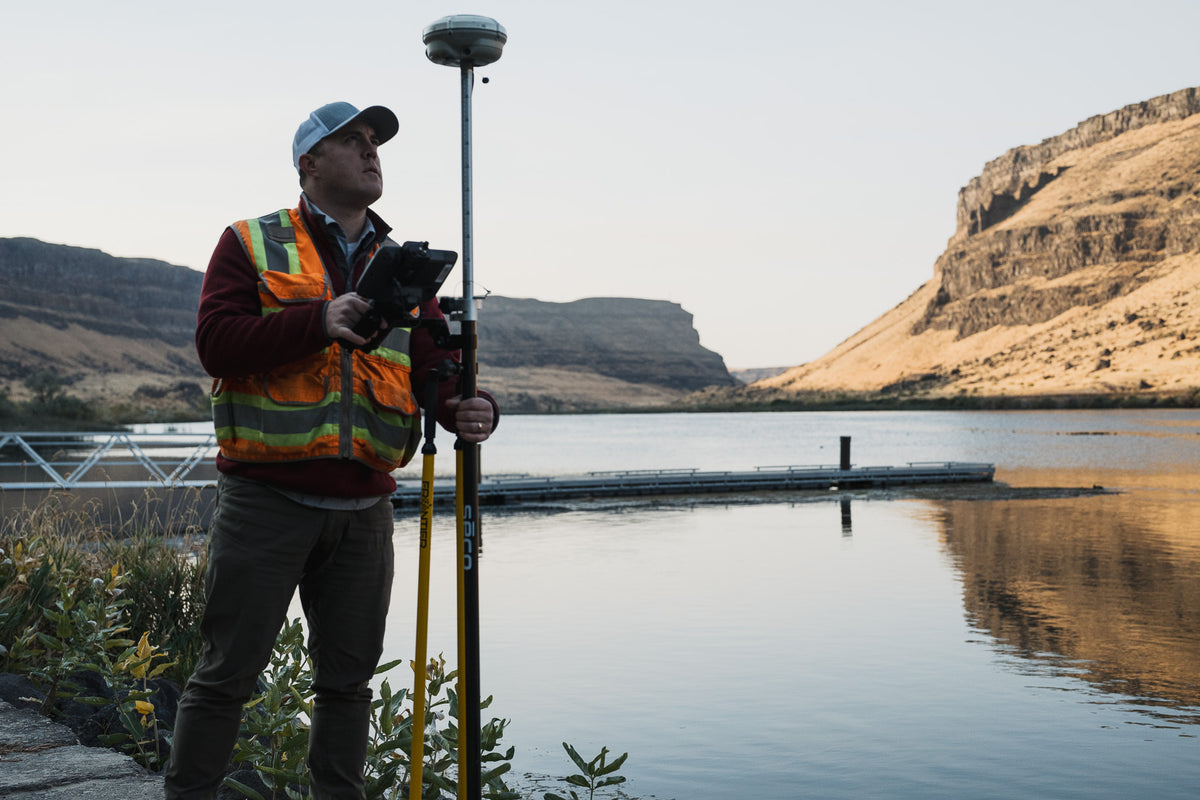
Hear from Navy, Army, and Air National Guard veterans who made the move from service to surveying.
You've Been Training for This
Whether you served in the Army, Navy, Air Force, or Marines, you learned the fundamentals of land surveying. You just didn't call it that.
Land Navigation
You read maps, plotted coordinates, and moved across unfamiliar terrain. Surveyors create the data behind those maps.
Attention To Detail
In the military, a missed detail could cost a life. In surveying, "close enough" isn't good enough either.
Mission Focus
Every day has an objective, and you complete it to the highest standard. Surveying runs on that same drive.
Discipline & Motivation
These don't come standard for everyone who walks in the door. Employers notice veterans because they bring them.
Field Problem Solving
Changing conditions, tough terrain, and incomplete information. You've handled all of it. Surveyors do too.
Teamwork
You know how to operate as a unit. Survey crews work the same way.
A Career path You'll Recognize
In the military, advancement follows a clear structure: education, experience, and positions held. Surveying works the same way. You decide how fast you move.
1. Start in the field.
Begin as a survey technician or field crew member. No license is required, and you'll get paid while you learn.
2. Build experience.
Work under a licensed surveyor and learn the tools: GPS, total stations, drones, and mapping software.
3. Pass your Exams
Take the Fundamentals of Surveying (FS) exam, followed by the Principles and Practice of Surveying (PS) exam.
4. Get licensed
Apply with your state board. Oregon and Washington offer experience-based pathways; Idaho requires a degree.

WHY VETERANS THRIVE
High demand. Surveyors are needed at every level, from field crews to licensed professionals.
Not a desk job. Spend your days outdoors, on public and private land, solving real problems.
Portable. Many surveyors hold licenses in multiple states, so your career can move with you.
Purpose. Surveyors establish the boundaries, roads, and infrastructure that communities are built on.
Ownership. Many veterans go on to start their own surveying businesses.
FAQ
I don't have a surveying background. Can I still get started?
I don't have a surveying background. Can I still get started?
Yes. Most people start in entry-level field roles and learn on the job. Your military experience will likely shorten the learning curve.
Do I need a degree?
Do I need a degree?
Not to work in surveying. For licensure, Oregon and Washington allow an experience-only pathway, while Idaho requires a degree.
Can I use my military education benefits?
Can I use my military education benefits?
Many veterans use education benefits toward surveying and geomatics programs. Contact us, and we'll help point you in the right direction.
I'm still serving. Is it too early to reach out?
I'm still serving. Is it too early to reach out?
No. Whether you're approaching your EAS, retirement-eligible, or still drilling with the Guard or Reserve, now is a good time to start planning.